

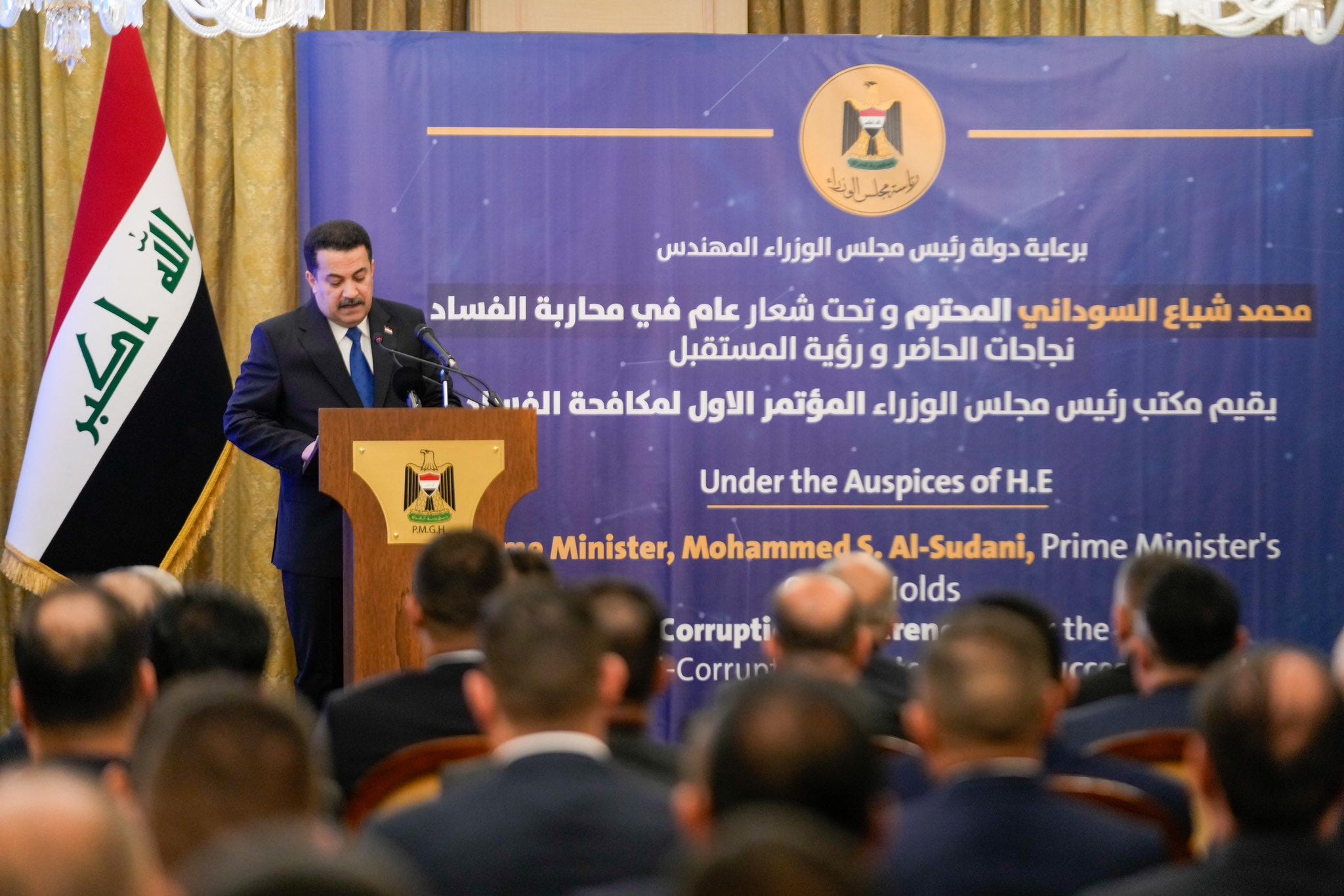
Prime Minister Sudani hosted an anti-corruption conference in January to review the government’s strategy since coming into office. In his address, Sudani presented a laundry list of anti-corruption measures and initiatives that his government had undertaken. But successive governments have pursued similar strategies with limited success. Unless the Sudani government adopts a radically different course of action, endemic corruption will continue to blight Iraq’s institutions.
Sudani outlined around 20 anti-corruption measures and initiatives that his government had pursued since taking office. Much like his predecessors, Sudani’s review of the government strategy focussed excessively on outputs and not enough on outcomes. Without evaluating the impact of anti-corruption measures, it is not possible to determine whether they have had any effect on combatting corruption.
Furthermore, the anti-corruption tools at the government’s disposal have been proven to be ineffective in the past. For instance, most of the 20 measures that Sudani outlined involve issuing directives and new guidelines to government institutions, either through his office or as cabinet resolutions. They include the following:
Directives to eliminate excessive allowances for senior officials
Directives to review spending for security agencies
Directives to review the distribution of land to senior officials
Directives to establish e-payments systems in order to combat tax evasion
Directives to undertake a review of the taxation system
In a country where the institutional setup is weak and dysfunctional, it is very difficult to ensure the implementation of government directives. Similarly, the Sudani government has pursued another approach that involves proposing anti-corruption laws including amending the statutory laws of the Integrity Commission and the Federal Board of Supreme Audit. But corrupt actors have become proficient at circumventing legal frameworks.
Sudani also referenced partnerships that his government has established with international organizations including UNDP to work on specific anti-corruption programs. Here again, there is a pressing need to assess whether previous partnerships have had any impact on reducing corruption.
Any attempt to tackle endemic corruption will invariably be met with deep-rooted resistance from those who benefit from it, and a radically different set of tools are needed if the Sudani government is determined to upend the status quo.