

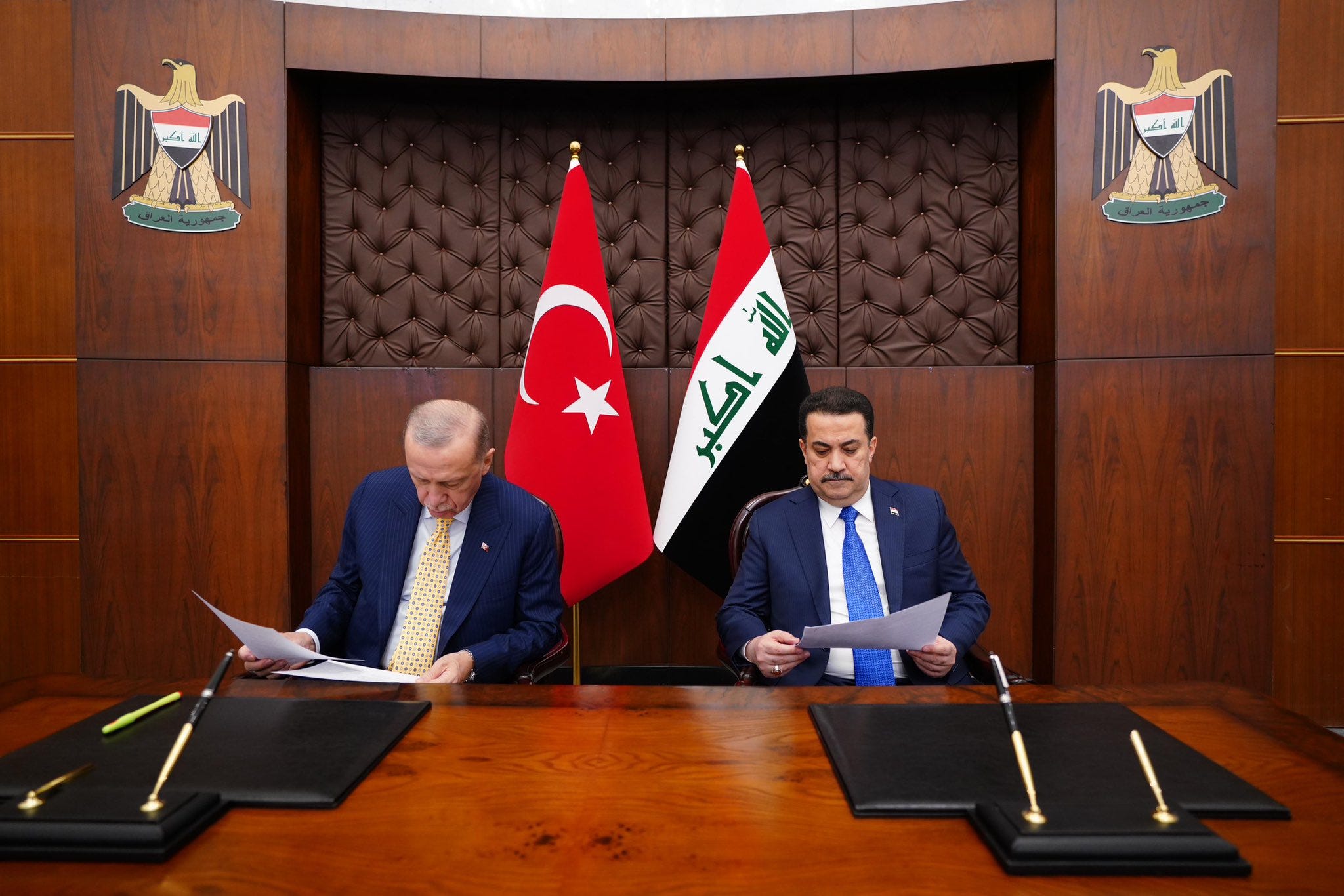
Turkish President Recep Tayyip Erdogan's visit to Iraq on April 22 signifies more of a symbolic gesture than a substantive shift in relations between the two countries. While the visit—the first since 2011—culminated in the signing of 26 memoranda of understanding (MoUs), these documents are largely aspirational and do little to resolve the persistent issues plaguing bilateral relations.
The MoUs span a broad array of sectors, including water sharing, security, trade, investment, health, agriculture, and higher education. However, MoUs by their nature lack enforceability and thus, offer minimal concrete commitment towards resolving longstanding disputes. Among the most pressing issues are:
The cessation of ongoing Turkish airstrikes on Iraqi territory, which, while targeting PKK militants, have also resulted in civilian casualties.
The presence of Turkish military bases in the Kurdistan Region, which Iraq deems illegal.
An equitable sharing of water from the Tigris River, despite continued upstream dam constructions by Turkey.
The resolution of disputes over the Iraq-Turkey oil pipeline and the resumption of oil exports to Ceyhan.
Erdogan's visit did not facilitate any substantial breakthroughs on any of these critical issues. Instead, the event seemed tailored more towards domestic political consumption. During the joint press conference, PM Sudani highlighted initiatives on water sharing and economic integration, including the Development Road project. Conversely, Erdogan emphasized the security challenges posed by the PKK, welcoming the Iraqi National Security Council's decision to label the PKK as a banned organization—a classification short of the 'terrorist' label, which Erdogan had hoped for.
Nor will this visit halt Turkish strikes on Iraqi territory, which Iraq considers a flagrant breach of its sovereignty. In December 2020, PM Kadhimi visited Ankara and 6 months later Turkey conducted a strike in Makhmour that led to the deaths of 4 civilians. PM Sudani visited Ankara in March 2023 (where Erdogan agreed to double the water released into the Tigris river for one month), but 5 months later Turkey struck the PKK near Sulaimaniyah.
While both sides portrayed the diplomatic exchange as a new chapter in their relations, the underlying issues remain unaddressed. The MoUs, lacking in enforceable commitments, are unlikely to alter the status quo, continuing the pattern of unresolved tensions and superficial diplomacy.