

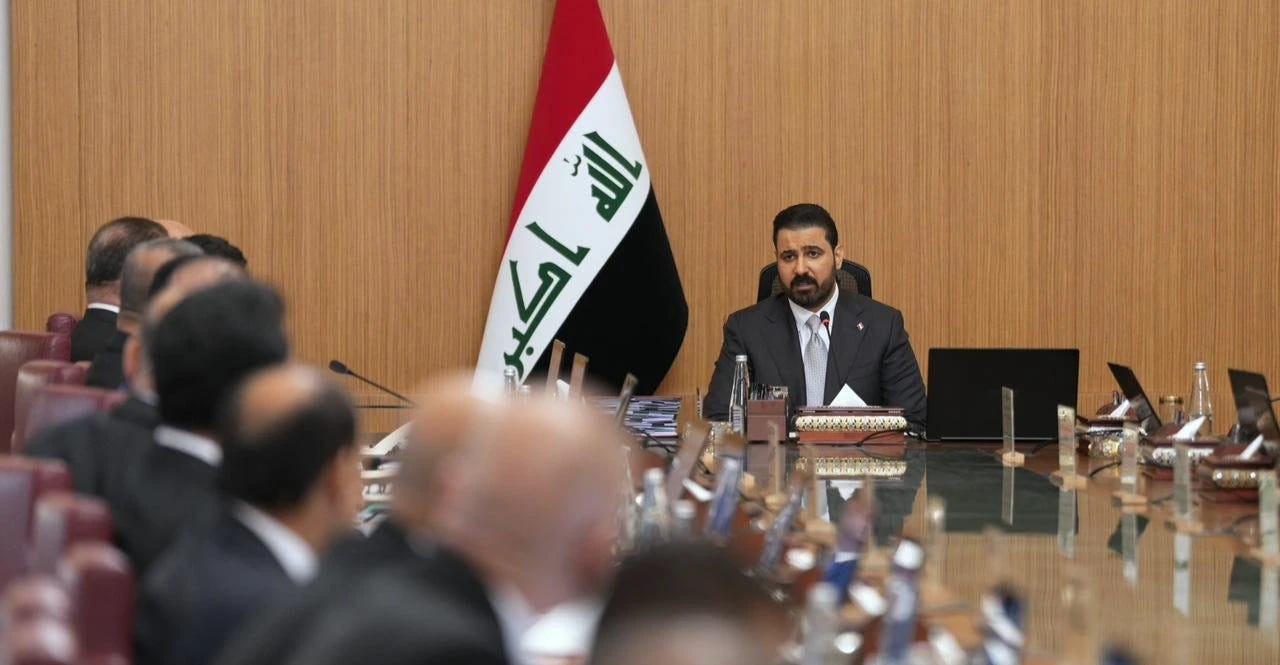
Prime Minister Ali Al-Zaidi has directed a comprehensive performance review of Iraq’s senior federal bureaucracy. The move echoes a similar initiative launched by former Prime Minister Sudani early in his premiership, when senior officials were subjected to performance assessments that resulted in both demotions and new appointments.
While Zaidi’s review shares similarities with Sudani’s earlier effort, it differs in both scope and institutional design, raising important questions about its objectives and potential political implications.
When Sudani came to office, he initiated a review of senior government personnel, focusing on directors general (DGs). Although the exercise was presented as a comprehensive evaluation of government performance, in practice it covered only a fraction of Iraq’s senior bureaucracy, which exceeds 4000 personnel. Of the hundreds of DGs who were reviewed, dozens were demoted in 2023, while more than 140 DGs were subsequently confirmed or appointed in 2024.
Zaidi’s initiative goes considerably further. Rather than focusing just on DGs, the new review extends to all senior grades, including deputy ministers, advisors, and officials with ministerial rank. This expands the scope of the exercise by approximately 440 additional senior officials.
Notably, however, the process applies only to the federal government and does not include the KRG. This is significant given the disproportionate concentration of senior grades within the KRG compared to its share of the population. According to available data, DG-level positions in the KRG account for approximately 22% of all DG grades in Iraq, while positions above the DG level in the KRG account for roughly 43% of the nationwide total.
The structure of the evaluation process also differs from Sudani’s approach. Under Sudani, the review committee was led by his chief of staff, Ihsan Al-Awadi, and included representatives from the Council of Ministers Secretariat (COMSEC), the Ministry of Planning, the Federal Board of Supreme Audit (FBSA), the Integrity Commission, and several advisors attached to the Prime Minister’s Office.
Zaidi has assembled a different team. The committee will be led by the head of the FBSA, while Awadi, who remains chief of staff, is absent from the process. The committee also includes Yusuf Khalaf, the recently appointed head of the Prime Minister’s Advisory Commission and a close confidant of Zaidi, alongside the head of COMSEC’s legal department.
Equally notable is the institutional role assigned to COMSEC. The June 17 directive establishing the committee was issued by COMSEC and signed by its secretary-general, Hamid Al-Ghizi. Moreover, the secretariat responsible for administering the process is composed of COMSEC personnel. This arrangement may carry political significance given that Ghizi is the most senior Sadrist figure currently serving in government.
The importance of this detail becomes clearer when viewed against the experience of Sudani’s earlier review process. During a major round of assessments in May 2023, Sudani demoted 57 DGs, a substantial number of whom came from the Ministry of Health, traditionally regarded as a Sadrist stronghold. Significant personnel changes also occurred at the Ministry of Electricity and the Baghdad Mayoralty, both institutions known to contain sizeable contingents of Sadrist-aligned senior officials.
Against this backdrop, Zaidi’s decision to grant COMSEC a central role may be intended, at least in part, to provide Ghizi with oversight of the process and reassure Muqtada Al-Sadr that the exercise will not become a vehicle for purging Sadrists from senior state positions.
Beyond the institutional arrangements, three major questions remain. The first concerns the criteria to which senior officials will, in practice, be subjected and the extent to which other considerations may come into play. The COMSEC directive states that officials will be assessed according to standards of “competence, professionalism, and integrity, in a manner that contributes to improving institutional performance.”
The second question relates to implementation. The sheer number of officials theoretically covered by the review raises doubts about how comprehensive the exercise can realistically be. Evaluating thousands of senior personnel across federal institutions is a significant undertaking that will require substantial administrative capacity.
The third and perhaps most politically consequential question concerns representation. Iraq’s senior bureaucracy has long reflected a delicate balance among competing political forces. As Zaidi decides which officials are retained, promoted, demoted, or replaced, he will have little choice but to account for these political realities.
The key issue is whether the prime minister chooses to merely preserve the existing balance of power within the state apparatus or whether he intends to recalibrate it. Such a recalibration could reflect the revised distribution of parliamentary seats held by the leading parties since last year’s election, or it could be based on an entirely different formula designed to strengthen his own political position. The answer will reveal whether the review is primarily an exercise in administrative reform or an attempt to reshape the political architecture of the state.